

Top Basement Moisture Solutions That Last
A finished basement can be one of the most valuable areas in a home – until a damp smell, peeling paint, or wet carpet reveals water where it does not belong. The top basement moisture solutions do more than hide a stain or dry out a corner. They identify how water is reaching the foundation, correct the source, and protect the space before insulation, flooring, walls, or furniture are installed.
For homeowners planning a basement renovation, moisture control is not a separate maintenance issue. It is the first construction decision. Building over an active water problem can lead to damaged finishes, mold growth, repeat repairs, and unnecessary costs. A proper assessment creates a clear scope, keeps the project on schedule, and provides peace of mind that the finished space is built to last.
Start With the Source of the Water
Basement moisture does not always come from the same place. A wet area after a heavy storm often points to exterior drainage or foundation infiltration. Condensation on pipes, windows, or cool foundation walls may be caused by humid indoor air. Water appearing near a mechanical room could be a plumbing or appliance issue rather than a foundation failure.
This distinction matters because the repair must match the cause. Applying waterproof paint to a wall will not solve overflowing gutters. Installing a dehumidifier will not stop groundwater pressure against a cracked foundation. An experienced contractor looks at timing, moisture patterns, grading, roof drainage, foundation conditions, and interior humidity before recommending work.
Homeowners should also separate a one-time event from a recurring condition. A sewer backup, failed sump pump, or burst pipe may require cleanup and targeted repairs. Repeated seepage in the same location usually calls for a more complete drainage or waterproofing strategy.
Top Basement Moisture Solutions for Lasting Results
The most effective solution is often a combination of exterior water management and carefully planned interior protection. The right scope depends on the home, soil conditions, foundation type, and the intended use of the basement.
Correct grading and roof drainage
The ground around the home should direct water away from the foundation. Settled soil, hard landscaping, and poorly placed garden beds can create low spots that hold rainwater against basement walls. Regrading establishes a positive slope so water moves away from the structure instead of pooling beside it.
Gutters and downspouts are equally important. Clean gutters, secure connections, and properly extended downspouts keep roof runoff from being discharged at the foundation. This is one of the most practical first steps because it addresses a high volume of water before it reaches the wall system.
Grading alone will not resolve every basement leak, especially where groundwater is high or foundation drainage has failed. Still, it is often the most cost-effective place to begin and should be reviewed before more invasive work is planned.
Exterior waterproofing
Exterior waterproofing is the most complete approach when water is entering through foundation walls, cracks, or deteriorated below-grade materials. The work typically involves excavating around affected foundation areas, cleaning and repairing the wall, applying a waterproof membrane, and installing a protection or drainage layer before backfilling.
Where appropriate, exterior work may also include new footing drainage. This gives groundwater a controlled path away from the foundation rather than allowing pressure to build against the walls. It is a major construction scope, but it addresses water on the outside of the building envelope, where the problem begins.
The trade-off is access and cost. Excavation can affect landscaping, patios, driveways, porches, and neighboring conditions. It requires thoughtful planning, proper safety measures, and coordination with any utilities or site features. When a basement is being fully renovated or an addition is underway, this can be the right time to complete exterior repairs properly.
Interior drainage and sump systems
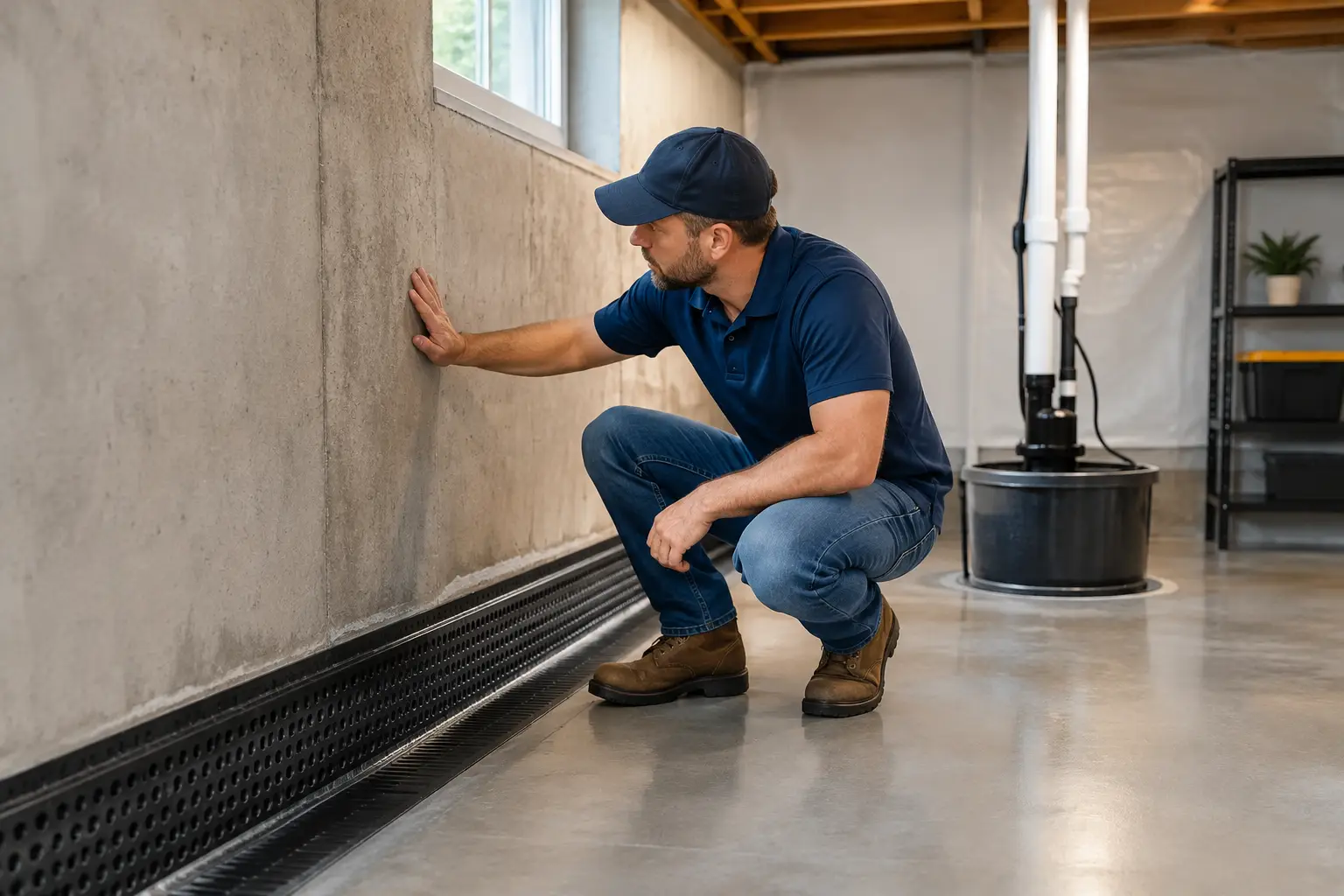
When exterior excavation is not practical, an interior drainage system can provide dependable water management. This approach usually involves creating a drainage channel along the interior perimeter, directing water to a sump basin, and pumping it safely away from the home.
Interior drainage does not stop water from reaching the outside of the foundation wall. Instead, it relieves water pressure and manages seepage before it damages the finished basement. It is often a sensible option for homes with limited exterior access, closely spaced properties, or areas where only certain foundation sections are affected.
A sump pump system should be sized and installed for the site conditions. It also needs a reliable discharge location and a backup plan for power outages. Battery backups and water-powered systems can add protection, but they should be selected based on the home’s water pressure, anticipated inflow, and maintenance needs.
Foundation crack repair
Not every crack requires a full waterproofing project. Some isolated cracks can be repaired from the interior or exterior using professional injection methods and compatible sealants. The repair method depends on whether the crack is active, how much movement is present, and whether it is allowing water through the wall.
Horizontal cracks, stair-step cracks in masonry, widening cracks, or visible wall displacement require closer evaluation. These can indicate structural movement rather than a simple water-entry point. Treating the visible crack without understanding why it developed can leave the underlying issue unresolved.
Humidity control and condensation prevention
A basement can feel damp even when no water is leaking through the foundation. Cool concrete walls and floors can cause humid air to condense, particularly in summer. Poor ventilation, uninsulated pipes, dryer vent issues, and unconditioned storage spaces can make the problem worse.
Dehumidification, insulation, air sealing, and proper ventilation can reduce condensation and improve comfort. This work is especially important in finished basements, where moisture can become trapped behind wall assemblies. Materials should be selected for below-grade conditions. Moisture-resistant insulation, appropriate vapor control, and raised or protected flooring systems can help avoid hidden damage.
A dehumidifier is useful maintenance equipment, but it should not be used as proof that a basement is dry enough to finish. If the unit is constantly full, walls feel wet, or musty odors return after cleaning, the space needs a more thorough investigation.
Plan Moisture Work Before the Renovation
Basement renovations involve multiple trades: demolition, concrete work, waterproofing, framing, mechanical systems, insulation, electrical, drywall, flooring, and finishing. Moisture repairs need to be completed and verified before those later stages begin.
This is where project coordination matters. A contractor should establish the condition of the foundation, identify required permits or inspections, schedule the work in the right order, and protect the site while repairs are underway. Skipping ahead to finishes can create rework that affects the budget and timeline.
For example, installing new framing against a damp foundation wall may conceal the issue temporarily. If water returns, the finished wall, insulation, trim, and flooring may all need to be removed. A controlled process costs less than rebuilding the same area twice.
Canex Group of Companies approaches major renovation work with this kind of end-to-end accountability, coordinating the details that turn a repair scope into a dependable finished space.
Questions to Ask Before Approving a Repair
Before moving forward, ask what is causing the moisture, how the proposed work addresses that cause, and what site conditions could change the scope. A clear proposal should identify the repair area, materials, drainage path, access requirements, restoration expectations, and any maintenance the homeowner will need to perform.
It is also reasonable to ask whether the contractor sees signs of structural movement, plumbing leaks, sewer issues, or mold that require separate specialists. Honest advice is not about recommending the largest possible project. It is about defining the work needed to solve the actual problem and explaining where uncertainty remains.
Protect the Space You Plan to Use
A dry basement starts outside the finished walls. Whether the answer is better grading, exterior waterproofing, an interior drainage system, crack repair, or humidity control, the best decision is the one that addresses the source with a realistic scope and professional execution.
Before selecting flooring or planning a new family room, office, rental suite, or storage area, make moisture control the first item on the construction plan. That early decision protects the investment that follows and gives every finished surface a stronger foundation.