

Choosing a Foundation Parging Repair Contractor
A failing parge coat can make an otherwise well-kept property look neglected fast. More importantly, loose, cracked, or missing parging can expose masonry and foundation surfaces to repeated moisture, freeze-thaw movement, and further deterioration. Choosing the right foundation parging repair contractor means getting more than a cosmetic patch. It means understanding why the finish failed, preparing the surface correctly, and completing repairs that hold up through Southern Ontario weather.
For homeowners, condo corporations, property managers, and commercial building owners, this work deserves the same disciplined planning as any exterior-envelope repair. The visible finish matters, but the condition behind it matters more.
What Foundation Parging Is Meant to Do
Parging is a cement-based coating applied over exposed foundation walls, block masonry, or other masonry surfaces. It creates a cleaner, more uniform appearance while helping protect the substrate from direct weather exposure and minor surface damage.
It is not a substitute for structural repair or a full waterproofing system. That distinction matters. A sound parging repair can improve protection at the exterior face of the foundation, but it cannot solve active water intrusion caused by failed drainage, damaged waterproofing membrane, poor grading, or a significant foundation crack.
A professional contractor starts by identifying which problem is actually present. In some cases, the right scope is localized removal and re-parging. In others, parging failure is only the symptom of movement, trapped moisture, salt exposure, or a larger building-envelope issue that needs attention first.
Signs You Should Schedule a Parging Assessment
Small hairline cracks are common in cementitious finishes, particularly after seasonal temperature swings. They do not always indicate a serious concern. However, repairs should not be delayed when cracks are widening, sections are separating from the wall, or the finish is breaking away in pieces.
Watch for hollow-sounding areas when tapped, visible spalling, white mineral deposits, persistent dampness near the foundation, exposed block or concrete, and cracks that extend beyond the parging into the substrate. Rust staining near metal components, recurring damage at the base of walls, and deterioration around window wells or exterior steps also deserve a closer look.
For commercial and multi-unit properties, early review can prevent a minor appearance issue from becoming a larger maintenance project. Loose material can create safety concerns in pedestrian areas, while neglected exterior damage can affect tenant confidence, curb appeal, and long-term asset planning.
What a Foundation Parging Repair Contractor Should Assess
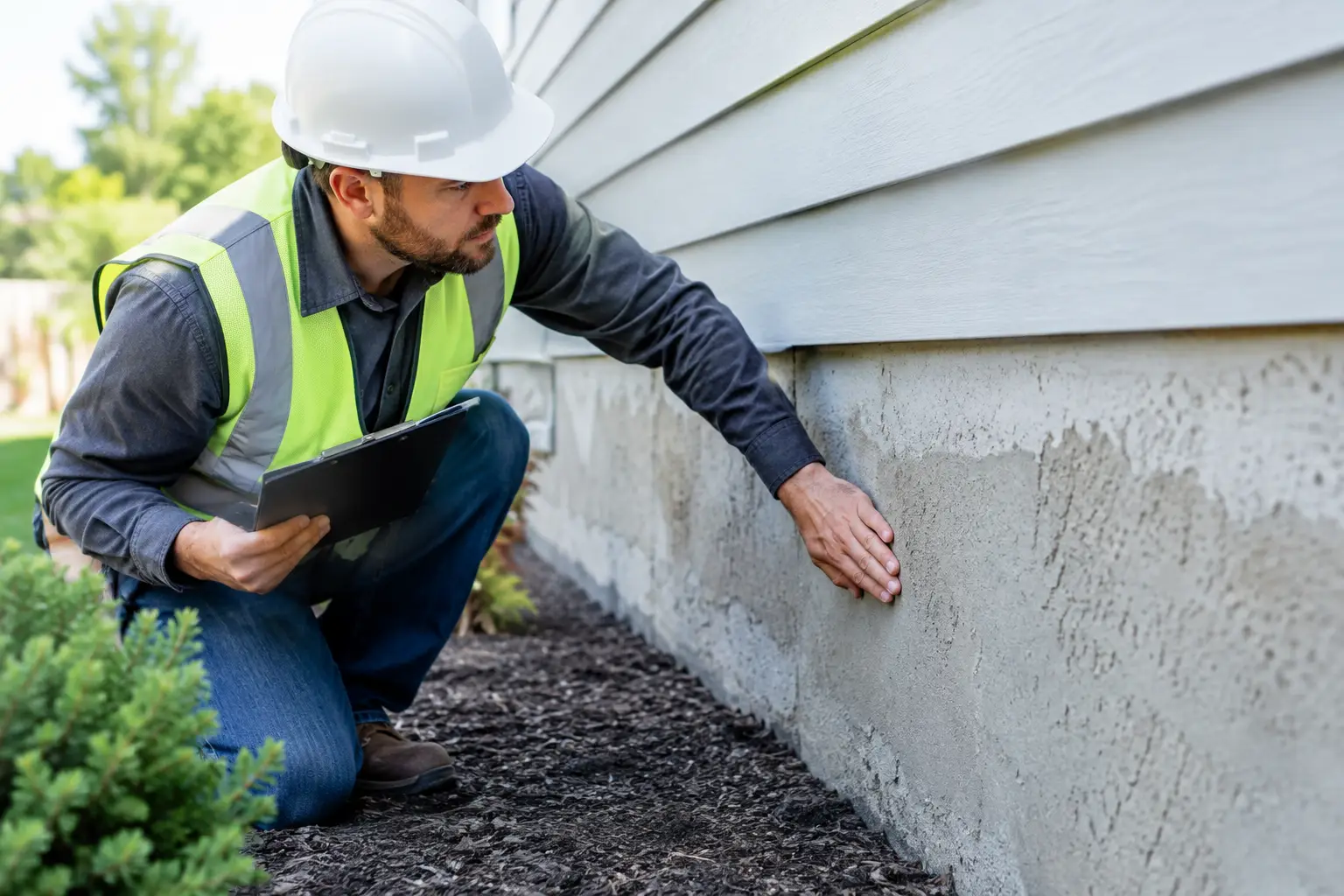
A dependable foundation parging repair contractor does not arrive with one answer for every wall. The assessment should consider the existing surface, the location of the damage, drainage conditions, access requirements, and the building’s age and construction type.
The contractor should first determine whether the existing parging is failing because of poor adhesion, weak or contaminated substrate, water exposure, movement, improper mix selection, or an earlier repair that was applied over loose material. Applying fresh material over an unstable surface may look acceptable at first, then fail again after the next freeze-thaw cycle.
Drainage deserves particular attention. Downspouts that discharge beside the foundation, negative grading that directs water toward the wall, leaking hose connections, and splashback at grade can all shorten the life of parging. Repairing the finish without addressing the water source can create repeat work and unnecessary cost.
The evaluation should also identify any conditions that require another trade or a broader repair scope. For example, an active structural crack may require engineering input or specialized crack repair. If excavation, waterproofing, masonry rebuilding, window-well work, or landscaping adjustments are needed, the project should be planned as one coordinated scope rather than a series of disconnected patches.
The Repair Process That Produces Better Results
Quality parging repair is driven by preparation. The work typically begins with protecting adjacent finishes, landscaping, walkways, and access areas. Failed or loose parging is removed back to stable material, and the exposed wall is cleaned so the new coating has a sound surface to bond to.
The substrate may need localized patching before a finish coat is applied. Depending on the wall condition and the specified system, the contractor may use a bonding agent, reinforcement in vulnerable areas, base material to restore depth, and a compatible finish coat. Corners, transitions, and areas near grade require careful detailing because they are especially vulnerable to impact and moisture exposure.
Curing conditions also affect the result. Cement-based materials should not be installed on frozen surfaces or during unsuitable weather. Rapid drying, excessive heat, rainfall, and cold temperatures can all compromise adhesion and finish quality. An experienced crew schedules the work around site conditions instead of rushing to close the wall in poor weather.
Texture and colour matching are part of the conversation, especially on visible residential facades, condominium buildings, and retail properties. A repair can be blended effectively in many situations, but an exact match is not always realistic when existing parging has aged, faded, or been repaired multiple times. A professional contractor will explain that trade-off before work begins, not after the crew has left the site.
Repair, Re-Parge, or Address a Larger Issue?
The right solution depends on the extent of deterioration. A small, isolated area with stable surrounding parging may only require a targeted repair. When widespread cracking, debonding, or inconsistent previous repairs affect a large wall section, removing and re-parging a broader area often creates a more durable and consistent result.
If the foundation is below grade and moisture is entering the building, exterior parging alone may not be the answer. The scope may need to include waterproofing, drainage corrections, or excavation. Likewise, if the underlying concrete or masonry is deteriorating, the substrate must be repaired before a new finish is applied.
This is where clear communication protects the property owner. The lowest estimate is not always the lowest cost over time if it covers only a surface patch and leaves the cause of failure untouched. Conversely, not every crack justifies a major excavation project. The goal is a practical scope that matches the evidence on site.
Questions to Ask Before Hiring a Contractor
Before authorizing work, ask how the contractor will confirm the cause of the damage and what preparation is included in the quoted scope. Ask whether loose material will be removed to a sound edge, how adjacent areas will be protected, what materials are proposed, and how weather conditions will be managed during installation.
You should also understand what is excluded. A parging quote may not include waterproofing, drainage changes, concrete crack injection, masonry rebuilding, permit requirements, or restoration of landscaping and hardscaping unless those items are clearly stated. Defined inclusions and exclusions reduce surprises once work is underway.
For occupied homes and active commercial sites, coordination matters just as much as workmanship. Confirm access plans, parking or pedestrian controls, debris removal, daily cleanup, and the anticipated schedule. If multiple trades are involved, one accountable contractor should coordinate the sequence so exterior repairs do not conflict with plumbing, landscaping, window replacement, or other planned work.
Canex Group of Companies approaches parging and exterior repair as part of the building envelope, not as a quick cosmetic task. That perspective supports better planning, accountable trade coordination, and a finished site that is clean, professional, and ready for the next stage of your property improvement.
Protect the Work After Repairs Are Complete
Once repairs are complete, keep water moving away from the foundation. Maintain gutters and downspouts, extend discharge points where needed, and monitor grading after landscaping or hardscape work. Avoid striking the parged surface with equipment, stored materials, or snow-removal tools, particularly near entrances and driveways.
A seasonal visual check is usually enough to catch early changes. Look for new cracks, impact damage, staining, or areas where water repeatedly contacts the wall. Acting while damage is localized gives you more repair options and helps preserve the appearance and performance of the exterior.
The right repair begins with an honest assessment, not a fast patch. When the contractor understands the wall, the water conditions, and the broader project needs, parging work can restore a clean exterior finish while helping protect the foundation surface for years to come.