

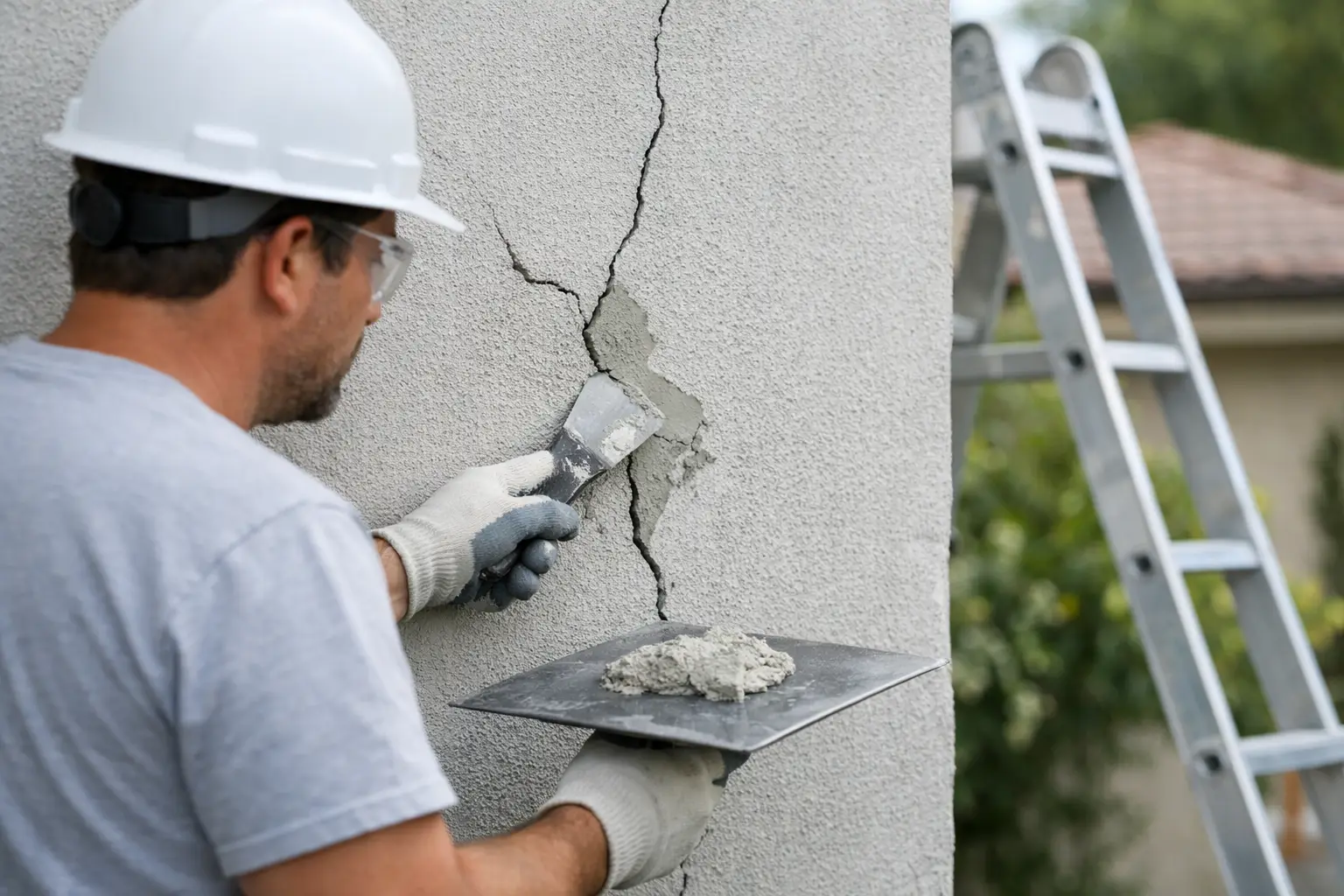
When Stucco Cracks Need Professional Repair
A thin line across a stucco wall can be easy to dismiss, especially when the finish still looks clean from the curb. But stucco cracks are not all the same. Some are limited to the surface finish and can be repaired efficiently. Others point to movement, water entry, failed detailing, or deterioration behind the wall. The right response protects both the appearance of the building and the wall system underneath.
For homeowners, condominium managers, developers, and commercial property owners, the goal is not simply to fill a crack and repaint. It is to identify why it appeared, determine whether moisture has reached the assembly, and complete a repair that performs through changing temperatures, rain, and seasonal movement.
What Stucco Cracks Can Tell You
Stucco is a durable exterior finish, but it is not flexible in the way vinyl or some siding systems are. It is installed in layers over a substrate and reinforcement system, then exposed to weather year after year. Small movements in the building, changes in temperature, and normal curing can create minor cracking. That does not automatically mean the wall is failing.
The concern grows when a crack is widening, recurring after repair, allowing water behind the finish, or appearing alongside stains, soft areas, rust marks, bulging, or interior moisture. In those cases, the visible crack may be the symptom, not the full problem.
A professional assessment should consider the crack pattern, its location, the age and type of stucco system, surrounding flashing and sealant joints, and any signs of moisture on the interior or exterior. A repair decision based on one close-up photo rarely tells the whole story.
Hairline cracks are often finish-level issues
Fine, shallow hairline cracks can occur as stucco cures or as a building settles slightly. If they are isolated, stable, and show no evidence of water intrusion, a localized surface repair may be appropriate. The repaired area should be properly prepared and blended to match the existing texture as closely as possible.
Even a small repair requires the right material. Applying a hard patch over a more flexible finish, or using an incompatible coating, can lead to a visible patch or renewed cracking at the repair edges. Colour matching also requires care, particularly on sun-exposed elevations where the existing finish has weathered over time.
Diagonal and stair-step cracks deserve closer attention
Cracks that run diagonally from window or door corners, follow masonry joints, or form a stair-step pattern can indicate structural movement or differential settlement. They may also reflect movement where two building materials meet. These areas need a more thorough review before any cosmetic work begins.
Window and door openings are common stress points because the wall is interrupted and water management details become more complex. If sealant has failed around an opening, water can enter behind the stucco and cause damage that is not obvious from the exterior.
Wide, deep, or spreading cracks can expose the wall system
A crack that is wide enough to collect dirt, has visible depth, or branches across a large section of wall should not be treated as a simple maintenance item. The finish may have separated from its base, reinforcing mesh may be compromised, or the substrate may be moving. Areas that sound hollow when lightly tapped can also suggest separation behind the surface.
At that point, the repair may require selective removal of stucco, inspection of the substrate and moisture barrier, replacement of damaged components, and restoration of the finish system. It is more involved than surface patching, but it addresses the condition that caused the crack in the first place.
Moisture Is the Risk Behind Many Stucco Cracks
Cracks matter because stucco is part of the building envelope. When water gets behind the finish, it can affect sheathing, framing, insulation, fasteners, and interior finishes. Repeated freeze-thaw cycles can make the damage worse, particularly in climates with wet winters and major temperature swings.
Water does not always enter through the most visible crack. It can come from failed caulking, missing or poorly installed flashing, roof or parapet details, window interfaces, decks, penetrations, or transitions between stucco and other cladding. A wall repair that ignores these details may look finished on day one and fail again after the next severe season.
This is why a qualified contractor evaluates the surrounding wall, not just the damaged spot. The scope may include checking control joints, expansion joints, flashing transitions, sealant joints, drainage paths, and adjacent cladding. For larger commercial, multi-unit, or high-rise properties, the review may also require access planning and coordination with building operations.
Repair or Replacement: How the Decision Is Made
There is no responsible one-size-fits-all answer. A small, stable surface crack on an otherwise sound wall may only need a localized repair and compatible finish coating. A broad pattern of cracking, persistent moisture staining, or loose stucco can justify a larger section replacement.
The condition of the underlying assembly is the deciding factor. If the substrate is dry, stable, and properly protected, repair can preserve the existing wall and control costs. If water has damaged the backing or the wall lacks essential drainage and flashing details, covering the evidence will not create a durable result.
Property owners should also consider the age of the exterior and the number of prior repairs. A wall with several mismatched patches, recurring cracks, and ongoing sealant failures may be more cost-effective to restore in a coordinated scope than to repair one area at a time. This is especially true when access equipment, tenant coordination, or traffic control is required.
The Right Process for Stucco Crack Repair
A dependable repair begins with an on-site review. The contractor should document the affected areas, identify likely causes, and explain whether the work is cosmetic, envelope-related, or potentially structural. If structural movement is suspected, the appropriate engineering input should come before finish repairs.
Next comes controlled removal where necessary. Loose or damaged stucco is removed back to sound material. The exposed wall is inspected for damaged sheathing, corroded components, deteriorated framing, failed membrane, or missing flashing. Repairs to the hidden layers come before the visible finish is restored.
The replacement area must then be integrated with the existing system. This can involve new lath or reinforcing mesh, base and finish coats, proper curing time, and a texture and colour match. Details at openings, joints, and transitions must be sealed and finished correctly so the repaired section can manage water with the rest of the wall.
For occupied homes, condominiums, and commercial buildings, execution matters as much as the repair method. Clear protection measures, clean work areas, reliable scheduling, and communication with occupants reduce disruption. Canex Group of Companies manages stucco and wall-system work with that full-project accountability, from assessing the exterior condition through coordinating the repair and final site cleanup.
Do Not Wait for These Warning Signs
Surface cracks can be monitored when they are minor and stable, but several conditions call for prompt professional attention:
- Cracks are widening, multiplying, or returning after a previous repair.
- Stucco is bulging, soft, crumbling, loose, or hollow-sounding.
- Brown stains, efflorescence, mould, or rust marks appear near cracks or openings.
- Water stains, damp drywall, or peeling paint appear inside the building.
- Cracks run from window and door corners or occur near balconies, roofs, and wall transitions.
Photograph the area and note when it was first observed. If possible, compare it after heavy rain or temperature changes. This record can help establish whether the condition is stable or progressing, but it should not replace a site inspection when water or movement is suspected.
Protect the Repair After the Work Is Done
A sound stucco repair benefits from regular exterior maintenance. Keep sealant joints around windows, doors, penetrations, and material transitions in good condition. Direct downspouts away from walls, address roof leaks quickly, and avoid attaching fixtures through the stucco without proper flashing and sealing.
Be cautious with pressure washing. Excessive pressure can damage the finish, force water into small openings, and worsen weak areas. Gentle cleaning methods and materials approved for the specific stucco or EIFS system are the safer choice.
Most importantly, treat new cracking as useful information. A timely inspection can turn a small repair into a controlled maintenance project instead of an expensive envelope restoration. The best result is not a wall that merely looks repaired, but one that is dry, properly detailed, and ready to perform for years.