

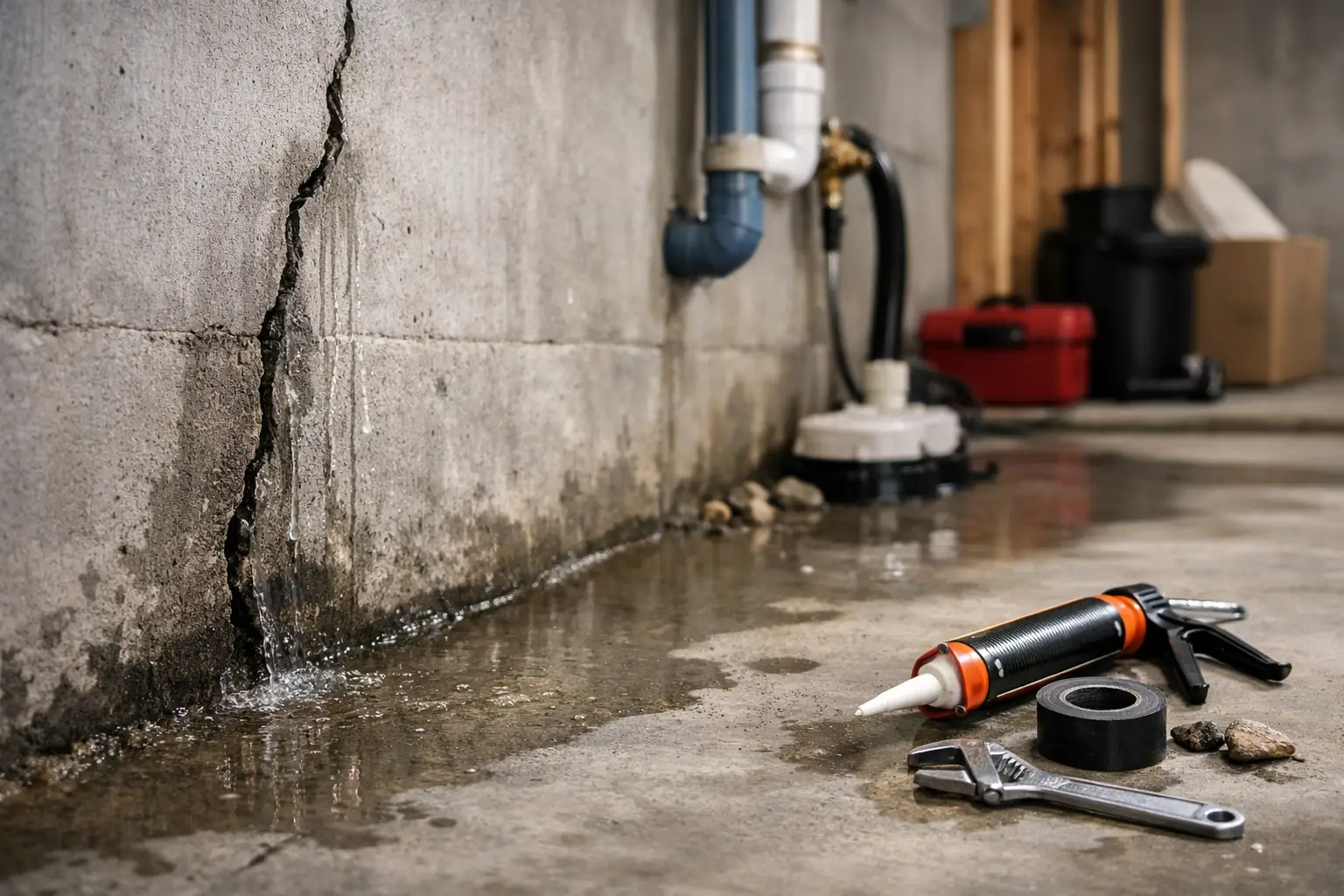
Why Do Basements Leak? Causes and Lasting Fixes
A damp basement rarely starts with a dramatic flood. More often, it begins with a musty smell after a storm, a dark line near the base of a wall, peeling paint, or a small puddle that returns in the same corner. Why do basements leak? Water is finding an easier path through, around, or beneath the foundation than your home was designed to handle.
For homeowners, water in the basement is more than an inconvenience. It can damage finishes, insulation, flooring, stored belongings, and electrical systems. Left unresolved, ongoing moisture can also affect indoor air quality and create conditions for mould growth. The right repair depends on identifying the source first, not simply covering the visible stain.
Why Do Basements Leak After Rain?
Rain-related leaks are usually a drainage problem before they are a concrete problem. The soil around a foundation absorbs water during a storm. If surface drainage is poor or the groundwater level rises, that water builds pressure against below-grade walls. This is known as hydrostatic pressure.
Concrete is durable, but it is not completely waterproof on its own. Small cracks, construction joints, utility openings, and gaps around window wells can all become entry points when water pressure increases. A basement may stay dry for most of the year, then leak during heavy rain because the soil is temporarily holding more water than the drainage system can move away.
Snowmelt can create the same issue. In colder climates, frozen ground can slow drainage at the exact time melting snow is adding large amounts of water around the home. A leak that appears in late winter or early spring deserves the same careful investigation as a summer storm leak.
The Most Common Causes of Basement Leaks
Poor grading around the foundation
The ground around a house should slope away from the foundation so rainwater naturally moves toward the yard, driveway drain, or approved drainage area. Over time, soil settles. Landscaping changes, patios, walkways, and garden beds can also create low spots that direct water back toward the home.
A negative slope may look minor from the yard, but it can send hundreds of gallons of stormwater toward the foundation during a single rainfall. Regrading is often one of the most cost-effective repairs when the issue is caught early. It is also important to protect the final slope from future settling and erosion.
Gutters and downspouts that discharge too close to the house
Roof runoff is concentrated water. When gutters overflow, are clogged, or drain beside the foundation, they can saturate the soil quickly. A downspout emptying near a basement wall can defeat otherwise good grading.
The solution may be as straightforward as cleaning gutters, repairing damaged sections, and extending downspouts to direct water away from the home. However, extensions should not send water toward a neighboring property, sidewalk, or area where it can flow back toward the foundation. Drainage corrections need to work with the whole site.
Foundation cracks and failed exterior waterproofing
Foundations can develop cracks as concrete cures, soils shift, or seasonal freeze-thaw cycles place stress on the structure. Some hairline cracks are minor, but any crack that allows water through should be assessed. Vertical cracks are common. Horizontal cracks, stair-step cracks in block walls, or cracks that widen over time may point to greater movement and require prompt professional review.
Exterior waterproofing membranes and drainage boards also have a service life. If the exterior system has deteriorated, water may reach the wall and enter at joints, cracks, or penetrations. A proper exterior waterproofing repair can involve excavation, surface preparation, crack repair, membrane installation, protection board, and drainage improvements. It is disruptive work, but it addresses water from the outside, where the problem begins.
Clogged or inadequate footing drains
Many homes rely on footing drains, sometimes called weeping tile, installed around the base of the foundation. These pipes collect groundwater and carry it toward a sump pit or approved outlet. If they are crushed, clogged with sediment, poorly installed, or no longer functioning, water can build against the foundation instead.
This issue is not always visible from indoors. Warning signs include recurring seepage at the floor-wall joint, water after extended rain, and a sump pump that runs constantly or rarely runs at all. A drainage assessment may include camera inspection, testing, or targeted excavation before deciding on repair work.
Window wells, exterior stairs, and penetrations
Below-grade windows and exterior stairwells are natural weak points because they sit lower than surrounding grade. A window well without a proper drain can fill like a bucket during a storm. Damaged covers, cracked caulking, missing seals, or settled landscaping can allow water to collect and push through the window assembly.
Utility penetrations for water lines, electrical service, HVAC equipment, and other mechanical systems also need careful sealing. These details are small, but water only needs one opening. In finished basements, leaks around penetrations can travel behind walls before becoming visible.
Plumbing leaks that look like groundwater problems
Not every basement leak comes from outside. A failing supply line, drain connection, water heater, washing machine hose, or condensate line can create moisture that is easily mistaken for a foundation issue. Plumbing leaks may occur regardless of weather and often appear near fixtures, mechanical rooms, or finished ceilings.
Before planning waterproofing work, determine whether the water appears only after rain, whether it is clear or discolored, and whether there are active plumbing lines nearby. A contractor should separate exterior water intrusion from internal mechanical leaks so the repair budget goes to the actual cause.
Finding the Water Entry Point
The visible wet area is not always the entry point. Water can move along the exterior wall, travel under a slab, or follow framing and pipes before showing up across the room. That is why a reliable diagnosis starts with patterns.
Note when the leak occurs. Does it follow heavy rain, rapid snowmelt, or a long period of wet weather? Does it appear when a bathroom is used or when the washing machine drains? Is the moisture coming through a wall crack, at the floor-wall joint, around a window, or from overhead?
Look outside as well. Check gutter discharge, settled soil, blocked drains, window wells, cracked paving, and areas where water pools near the building. Photos taken during or immediately after rainfall can be especially useful because they document the direction of water flow. This information helps a qualified contractor recommend a targeted solution rather than a temporary patch.
Choosing the Right Basement Leak Repair
There is no single repair that fits every basement. Interior crack injection can be effective for a specific non-structural crack. Interior drainage systems can manage groundwater where exterior excavation is impractical. Exterior waterproofing is often the more comprehensive option when water is entering through foundation walls or deteriorated exterior protection.
The trade-off is scope and access. Interior solutions may be less disruptive to landscaping but do not always stop water from reaching the outside of the foundation. Exterior repairs address the wall directly, yet may require excavation around decks, gardens, sidewalks, or utilities. For major renovations, this is the time to coordinate waterproofing, drainage, insulation, foundation repairs, and basement finishing as one planned scope of work.
Avoid relying on waterproof paint as the primary answer to active water pressure. Coatings may improve a surface in limited situations, but they can fail when drainage issues, cracks, or hydrostatic pressure remain. Likewise, finishing a basement before resolving moisture puts new drywall, flooring, and millwork at risk.
When to Call a Professional
Call for an assessment when water returns after storms, cracks are growing, basement walls are bowing, mould or persistent odours are present, or a finished space has been damaged. Immediate attention is also warranted when water reaches electrical equipment, appliances, or a furnace room.
A dependable construction partner will inspect both the building and the site conditions, explain the repair options clearly, coordinate required trades, and protect the surrounding work area. At Canex Group of Companies, that accountable approach matters because a dry basement depends on details above ground, below ground, and inside the home.
Do not wait for the next major storm to make the diagnosis for you. Address the first signs of moisture while the repair can still be planned carefully, budgeted honestly, and completed before water turns a manageable issue into a larger renovation.