

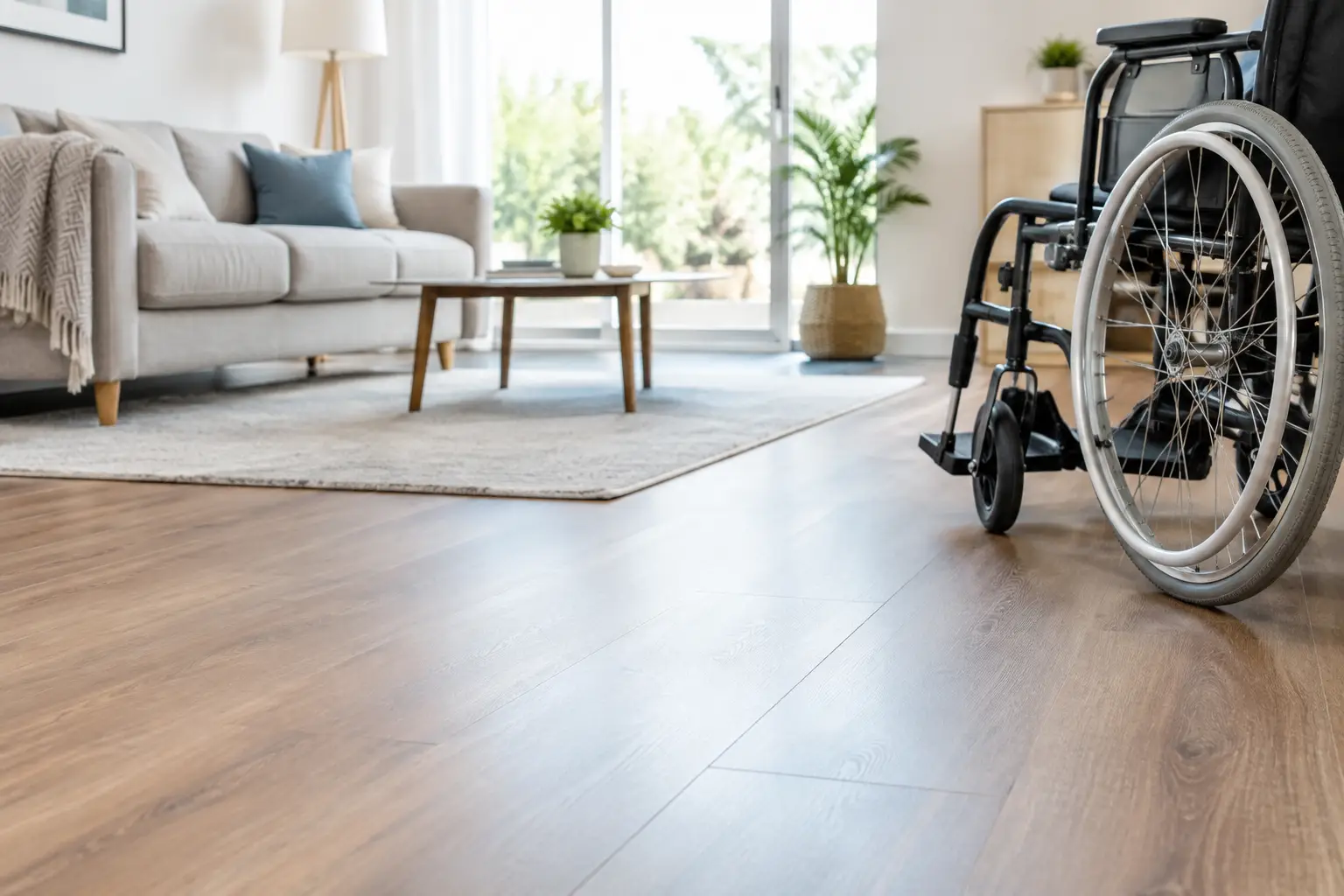
Best Accessible Flooring Options for Safer Homes
A flooring decision can either make daily movement feel natural or turn every doorway, spill, and change in level into a problem. The best accessible flooring options create a stable, low-maintenance surface for people using wheelchairs, walkers, canes, or simply planning to stay comfortably in their home as needs change.
For an accessibility renovation, appearance matters, but performance comes first. The right floor should support secure footing, easy rolling, clean transitions between rooms, and reliable durability in the spaces where life happens. A practical selection also has to work with the existing subfloor, moisture conditions, room use, budget, and the rest of the renovation plan.
What Makes Flooring Accessible?
Accessible flooring is not one material or a single finish. It is a coordinated set of choices that reduces barriers throughout the home. A floor can look beautiful and still create unnecessary risk if it is too slippery when wet, difficult for a wheelchair to cross, heavily textured, or interrupted by raised thresholds.
Start with surface traction. Kitchens, bathrooms, entries, and laundry rooms need dependable grip, especially when water is present. This does not mean every room needs a rough finish. It means choosing materials and finishes that offer appropriate slip resistance for how the room will actually be used.
Rolling resistance is equally important. Thick carpet, deep grout joints, uneven plank edges, and soft underlay can make a manual wheelchair or walker harder to move. Smooth, firm flooring reduces effort and supports safer transfers.
Transitions deserve the same attention as the floor itself. A small height difference between rooms can be a tripping hazard or a difficult bump for a wheelchair. The strongest accessibility plans use consistent flooring where practical or install low-profile, properly secured transition details where materials change.
Best Accessible Flooring Options for Everyday Use
No single product is right for every room. The best choice depends on the household, the condition of the home, and how much moisture, traffic, and maintenance the space will receive.
Luxury Vinyl Plank and Luxury Vinyl Tile
Luxury vinyl plank and luxury vinyl tile are often among the most practical choices for accessible renovations. They provide a firm, relatively smooth surface that is comfortable underfoot and easy for mobility devices to cross. Many products offer realistic wood or stone visuals without the maintenance demands of natural materials.
Vinyl performs well in kitchens, hallways, living areas, bedrooms, and many bathrooms because it handles everyday spills and cleans easily. It is also available in a wide range of colours and patterns, which can help create visual contrast at room entries or near changes in level.
The trade-off is product quality and installation. A low-grade product may dent, separate, or show wear sooner in high-traffic areas. Click-lock planks can also create issues if the subfloor is uneven or if the installation is not carefully planned. For a long-term accessibility renovation, subfloor preparation and a professional installation matter as much as the finish layer.
Sheet Vinyl
Sheet vinyl is a strong option where water resistance and low-maintenance cleaning are priorities. Because it can be installed with few seams, it is particularly useful in bathrooms, laundry rooms, and kitchens. Fewer seams mean fewer places for moisture to penetrate and fewer interruptions underfoot.
For people using a wheelchair or walker, sheet vinyl offers a smooth rolling surface. It can also provide slightly more comfort than tile, which is welcome in rooms where people stand for long periods.
Its limitation is repairability. If sheet vinyl is badly damaged, replacing a section is more complicated than replacing an individual plank or tile. The material selection and layout should be planned carefully before installation, especially around toilets, vanities, doorways, and floor drains.
Porcelain Tile With the Right Finish
Porcelain tile is durable, water-resistant, and well suited to wet areas when the correct finish is selected. It is an excellent choice for barrier-free bathrooms, entryways, and mudrooms, particularly where a renovation includes a curbless shower or other water-management details.
The key is avoiding polished tile in locations where wet feet are expected. Choose a tile with a slip-resistant finish and consider the grout joint. Smaller-format tile can improve traction in shower areas because the grout lines add grip, but excessively wide or deeply recessed grout joints can make cleaning and rolling more difficult.
Tile is hard underfoot and can feel cold without radiant heat. It also requires a stable, properly prepared substrate to prevent cracking. When a bathroom is being rebuilt for accessibility, the floor structure, waterproofing, shower slope, drain location, and finished-floor heights should be coordinated as one scope of work.
Hardwood and Engineered Hardwood
Hardwood can work well in dry living spaces, bedrooms, dining areas, and hallways. It creates a firm, smooth surface that supports mobility devices and adds long-term value to a home. Engineered hardwood is often a more flexible choice where changes in humidity or subfloor conditions are a concern.
For accessible use, choose a satin or matte finish rather than a high-gloss surface. Glossy floors can reflect light and make it harder for some people to read the floor plane. They can also show scratches and scuffs more readily.
Natural wood is less forgiving of moisture than vinyl or tile. It is not usually the first choice for a full bathroom, active entry, or laundry room. Still, when used in the right areas and tied into low-profile transitions, hardwood can be both functional and attractive.
Low-Pile Carpet for Bedrooms and Comfort Zones
Carpet is not automatically excluded from an accessible home. In bedrooms and sitting areas, a low-pile, dense carpet can add warmth, sound control, and comfort. It may also reduce injury severity if someone falls.
The specification is critical. Thick, plush carpet and heavy padding increase rolling resistance and can catch the feet of people using canes or walkers. Select a low, tightly constructed pile with a firm cushion designed to support movement. Avoid loose area rugs unless they are properly secured with a non-slip backing and have minimal edge lift.
Carpet is harder to keep clean after spills and may not suit households managing allergies, pets, or frequent mobility-device traffic. It is best used selectively rather than across the entire home.
Flooring Details That Matter as Much as Material
The most successful accessibility projects look beyond the product sample. A dependable floor begins with a level subfloor. Uneven conditions can cause vinyl planks to separate, tile to crack, and transitions to become more pronounced over time.
Door thresholds should be evaluated room by room. Where possible, keep the finished floor elevation consistent across adjacent spaces. If a transition is necessary, use a low-profile solution that is securely installed and easy to cross. This is especially important at bathroom doors, where changes in waterproofing assemblies can create height differences.
Visual contrast can improve safety without making a home feel institutional. A floor colour that differs from walls, baseboards, stair edges, or shower areas can help define boundaries for people with low vision. On stairs, clearly visible nosings and reliable handrails are often more valuable than a decorative finish.
Acoustics are another consideration in condominiums, apartments, and multi-level homes. Underlayment requirements, sound transmission rules, and floor-height limits may affect the materials available. These restrictions should be confirmed before products are ordered, not after demolition begins.
Choosing Flooring Room by Room
A whole-house approach does not require the same floor everywhere. It requires each choice to work together. Luxury vinyl or engineered hardwood may suit bedrooms, halls, and living spaces, while slip-resistant porcelain tile or sheet vinyl handles bathrooms and laundry areas more effectively.
In an accessible kitchen, prioritize a surface that is easy to clean, firm under rolling loads, and comfortable enough for meal preparation. In a barrier-free bathroom, prioritize wet traction, waterproofing, and smooth movement into the shower zone. At an entry, choose durability and traction that can stand up to wet shoes, grit, and seasonal traffic.
A consistent palette can connect these materials without sacrificing performance. It also makes future repairs and additions easier to plan.
Plan Flooring as Part of the Renovation
Flooring should not be the last decision made in an accessibility renovation. It affects door clearances, cabinet heights, shower details, trim, appliance installation, and the transition between existing and renovated spaces. Addressing it early prevents avoidable changes, delays, and added cost later.
Canex Group of Companies coordinates accessibility renovations with the full construction scope in mind, including demolition, subfloor correction, permits, trade scheduling, and final finishing details. That level of oversight helps ensure the floor supports the home rather than creating a new barrier.
The right accessible floor is one that feels dependable every day. Choose the material that fits the room, insist on proper preparation, and treat every threshold as part of the safety plan.